
Top Signs You Need Chimney Cleaning Service – Don’t Ignore These
The signs homeowners ask us about most are rarely the real problem. A musty smell in July, a white crust on the outside brick, a damper that won’t sit flat – each one is downstream evidence of a condition that’s been building inside the flue for months. The symptom shows up late. The cause starts early. Knowing how to read those signals is what separates a quick sweep from a repair bill, and it’s the difference between catching a problem in its first season and finding it after it’s already done damage. If you’d rather have a trained eye look at it than guess, call (855) 658-4120.
What Each Chimney Smell Is Telling You
Smell is the most reliable early warning a chimney gives you, and the type of odor narrows down the cause fast. If you can identify the smell, you’re already halfway to knowing what’s wrong.
- Campfire or smoke smell in warm weather. This is a classic sign of creosote buildup combined with a pressure reversal – the flue is pulling air down into the house instead of up and out. The smoke residue is sitting in the flue, and humid summer air pushes it back into the room. It usually means the chimney is overdue for a sweep.
- Musty, damp, earthy smell. That’s moisture. Either water is getting past the crown or cap, or the flue is absorbing it through the masonry. It’s the smell of a chimney that’s staying wet, and wet creosote turns acidic.
- Sharp, acrid, almost chemical smell. This points to a later stage of creosote – the glazed, hardened kind that’s much harder to remove and far more flammable. It can also indicate a blocked flue not venting properly. Either way, stop burning until someone inspects it.
- Dead-animal or nesting smell. Birds, squirrels, and raccoons treat an uncapped flue as real estate. The odor is the giveaway, and the nesting material is a blockage risk.
In our experience around Meadow Hills, the campfire smell is the one people notice first, usually on the first warm day of spring. It’s also the one easiest to dismiss – “it’s just the fireplace settling” – when it’s actually the flue asking for attention.
How to Read Staining on Your Chimney
Stains are diagnostic evidence, not cosmetic blemishes. A white efflorescence stain on your chimney’s exterior brick isn’t a cosmetic issue – it’s water migrating through your masonry and carrying minerals out with it, which means your flue is absorbing moisture with every rain cycle. The stain is the evidence; the water damage is the problem. Here’s how to read the pattern:
- White, powdery staining (efflorescence). Minerals pushed to the surface by moisture moving through brick and mortar. Left alone, the freeze-thaw cycle in a Colorado winter works on that saturated masonry and starts cracking it.
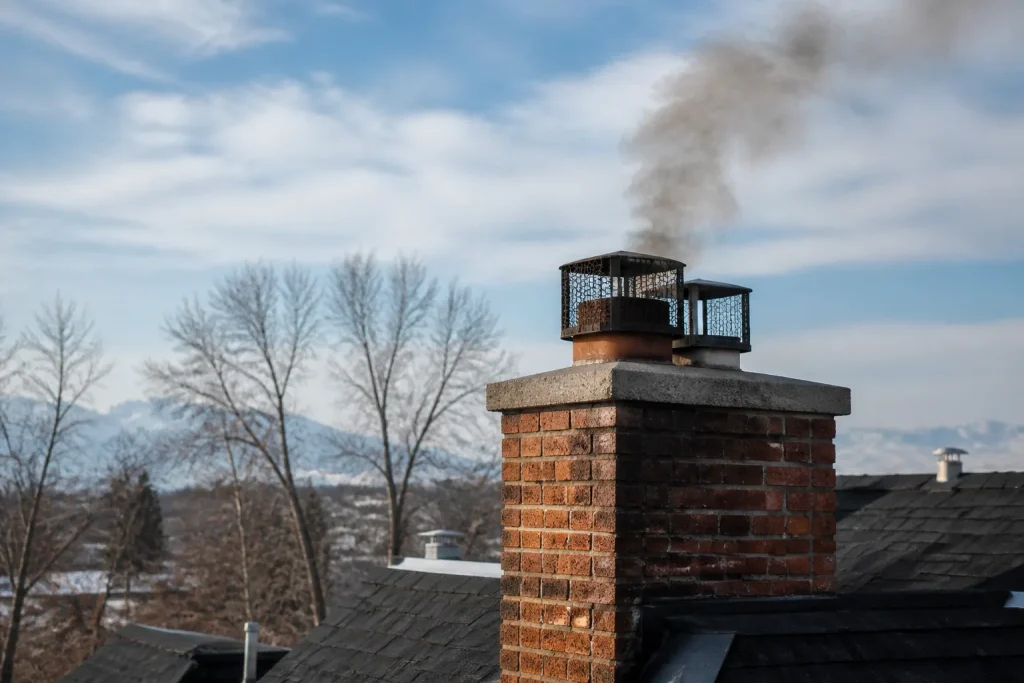
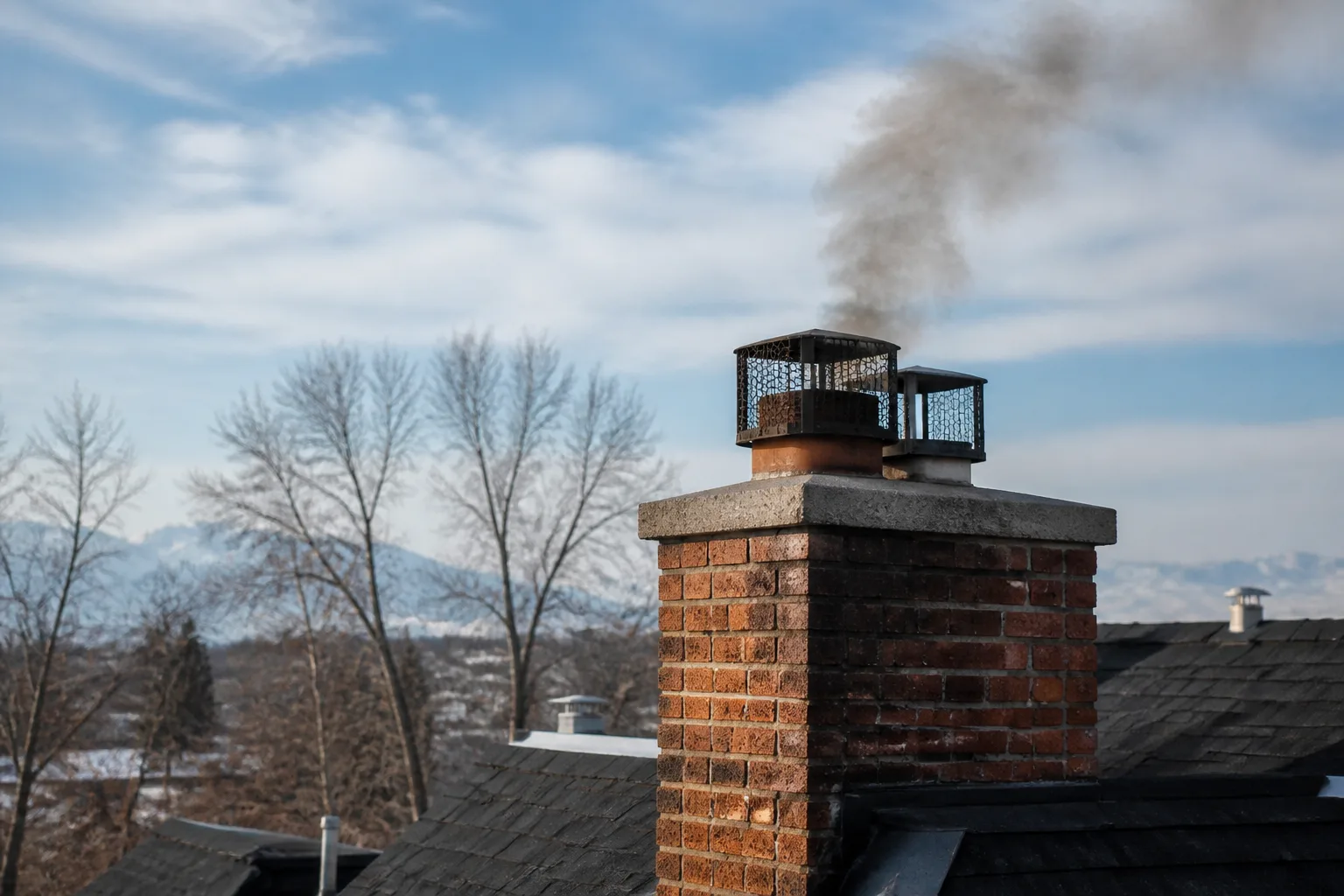
- Black streaking down the exterior. Smoke and soot escaping from a flue that isn’t drafting correctly, or from a cracked flue liner. It often shows up near the top of the chimney, which points to trouble at the crown or cap level.
- Brown or dark staining on the firebox interior. Interior staining that creeps above the damper is a sign smoke has been backing into the room. It tells you combustion gases aren’t leaving the way they should.
- Rust or corrosion on the damper or firebox metal. Moisture sitting where it shouldn’t be long enough to eat the metal.
If you’re seeing efflorescence, we can look at the chimney cap & crown at the same time to find where the water is getting in. Fixing the water source is the real answer; painting over the stain just hides the evidence.
Draft and Combustion Signs You Notice Before Anything Visible
Long before a stain appears on the brick, your fire tells you the flue is struggling. These are the signals that show up inside the home first, and each one is worth taking seriously:
- Smoke rolling into the room when you light a fire, especially on cold starts or windy days. A properly drafting chimney pulls smoke up and out.
- A fire that’s hard to keep lit or burns sluggish – it’s fighting a flue that isn’t pulling air the way it should, often from a partial blockage or buildup.
- The damper won’t seal or won’t open fully. A stuck-open damper sends your heat up the chimney; a stuck-closed one can route combustion gases into the house.
- Visible soot on the glass doors or firebox, building faster than usual – incomplete combustion, often from restricted airflow.
- A headache or stuffy feeling in the room during a long burn. This is the one to never wave off. It can mean carbon monoxide is not venting properly. Open a window, put the fire out, and get the chimney looked at before you burn again.
Those draft symptoms are why we treat every sweep as a chance to inspect the full system – not just the flue, but the firebox and damper too. If the fire itself is the problem, the fix may fall under fireplace repair rather than cleaning alone.
Why “No Obvious Signs” Doesn’t Mean Clean
Here’s the part that surprises people: a chimney with nothing visibly wrong can still need cleaning. That’s especially true for gas appliances, where combustion deposits are invisible but corrosive. Gas fireplaces and gas furnaces vent differently than wood, and the byproducts they leave behind are acidic. They don’t build the thick, obvious creosote a wood fire does, so the flue can look fine from the firebox while corrosion is quietly eating at the liner and the metal components. You can’t see it, and you wouldn’t know it was happening without an inspection.
Wood-burning flues have their own version of this. Creosote builds in layers, and the early layers don’t announce themselves. A flue can carry a meaningful buildup while the fire still burns well and the room still smells normal. That’s the whole reason annual inspections exist – not because something’s already wrong, but because the things that go wrong are usually invisible until they aren’t.
We work with professional-grade components from brands like HeatShield and DuraFlex because the point of an inspection is to find a problem while it’s still a small fix. A liner that’s protected and sound is the reason a chimney doesn’t become a structural issue. One inspection tells you exactly what your chimney needs – and what it doesn’t. That’s also where our chimney sweep visit earns its keep, because the same specialist who cleans the flue spots the early wear before it becomes a repair.
The Usage Threshold: How Often Should a Chimney Be Swept?
The general rule – regardless of whether you’ve noticed any signs – is that a chimney should be inspected once a year and swept when there’s roughly an eighth of an inch of creosote buildup in the flue. But usage is the thing most homeowners undercount. Cleaning frequency depends on how much you actually burn, not on what you can see.
- Wood burners: a cord of wood a year is a light load; several cords over a heating season is a working chimney that needs a sweep. The more you burn, and the more unseasoned wood you burn, the faster creosote accumulates.
- Heating season count: two or three heating seasons of regular fires is usually the point where an inspection confirms whether a sweep is due.
- Gas appliances: output and make-up air matter more than volume. A gas fireplace that runs often, or a gas furnace vented through the chimney, still needs a yearly inspection even with zero visible soot.
- Chimneys that sit unused: a flue that hasn’t been burned in a year or more is a nesting site and a moisture trap. It still needs a look.
The threshold isn’t a number on a calendar. It’s a combination of fuel burned, heating seasons, and appliance type – and that’s exactly what a trained inspection measures.
When to Call a Pro
If you’re seeing any of the signs on this page – odor, staining, draft trouble, or an appliance that just isn’t behaving – the smart move is to get it inspected before the next burning season, not after a scare. A sweep and inspection tell you what’s actually going on inside the flue and let you plan the fix on your schedule instead of a rushed one. We cover the full chimney system – from the firebox to the cap – and the same specialist who cleans your chimney is qualified to repair it, so you’re not handing off to a second contractor mid-project.
Related services in Meadow Hills: if the inspection turns up worn components or a decision about relining, we handle structural chimney repair alongside routine sweeping, and our Chimney Sweep Meadow Hills overview walks through everything we do. To book a free estimate, call (855) 658-4120. We answer 24/7, and fast dispatch runs 7am-7pm, Sunday through Friday.
The Bottom Line
The signs that matter aren’t the ones that look dramatic – they’re the quiet ones. Smells, stains, and draft changes are all telling you the same thing: something inside the flue has been building for a while, and the visible symptom is the late-stage evidence. The absence of signs isn’t proof of a clean flue, either, especially with gas appliances. Use the yearly inspection as your baseline, and let the usage threshold – cords, heating seasons, appliance output – decide when a sweep is due. If you’re in Meadow Hills and need help reading the signs, Chimney Sweep Meadow Hills offers free estimates – call (855) 658-4120. Our technicians have up to 10 years of experience, and we’ll tell you plainly what your chimney needs and what it doesn’t.
Frequently Asked Questions
A standard sweep is priced per job based on what the inspection finds, so the written estimate sets the final price before any work begins. Call (855) 658-4120 for a free estimate – we’ll tell you what’s needed and what can safely wait.
Yes, if your usage warrants it. Creosote builds in layers you can’t see from the firebox, and gas appliances leave corrosive deposits that never show as soot. A yearly inspection is the only reliable way to know.
Inspect once a year, and sweep when there’s roughly an eighth of an inch of creosote in the flue. The frequency depends on how much wood you burn, how many heating seasons you’ve put in, and what appliance you vent – not on what you can see.
Creosote keeps building, and the glazed stage is far harder to remove and far more flammable. Moisture from an uncapped or cracked crown can corrode the liner, and a blocked flue can back combustion gases into the room. None of that is worth waiting on – call (855) 658-4120 for a free estimate.
Written by the team at Chimney Sweep Meadow Hills.
Need Chimney Cleaning Help?
Call Chimney Sweep Meadow Hills - the local pro we connect you with is licensed and insured, with free written estimates in Meadow Hills.
(855) 658-4120