
Last updated November 23, 2026
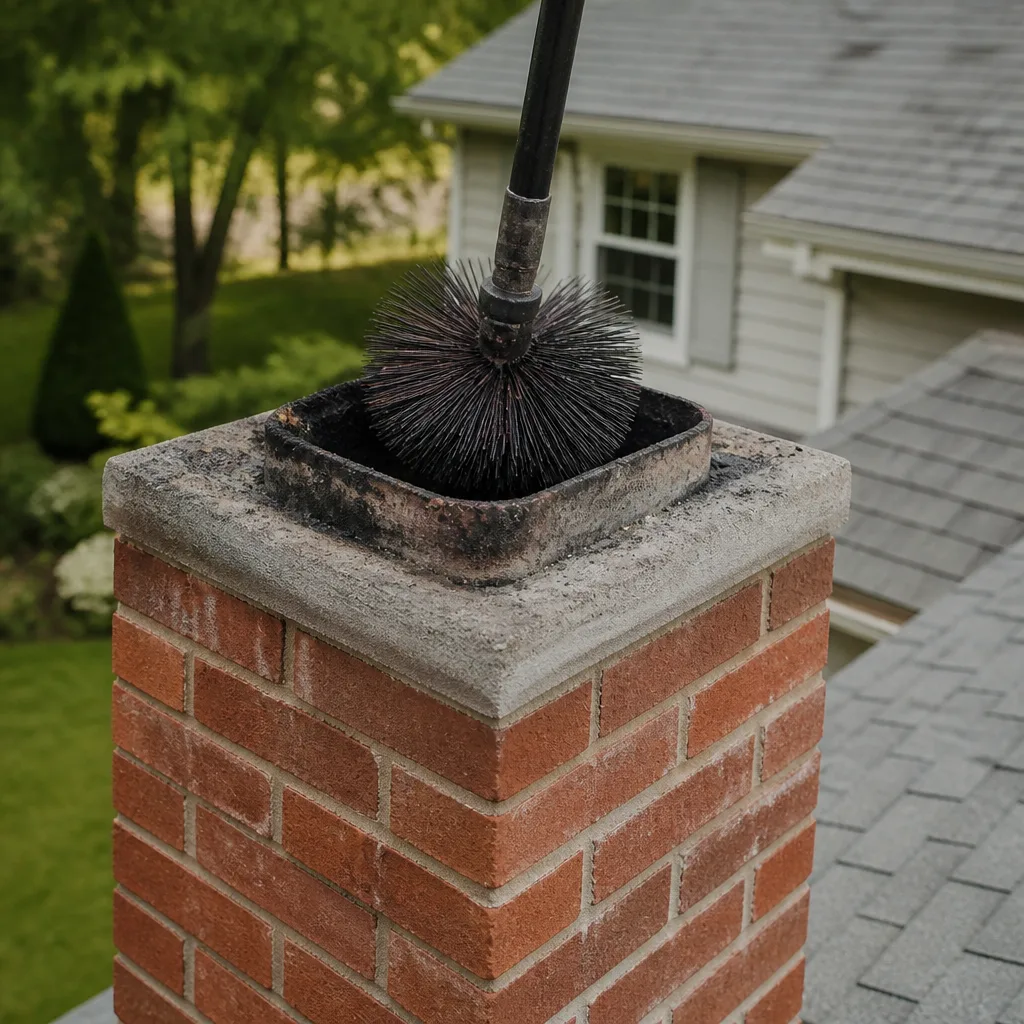 Sweep & inspection
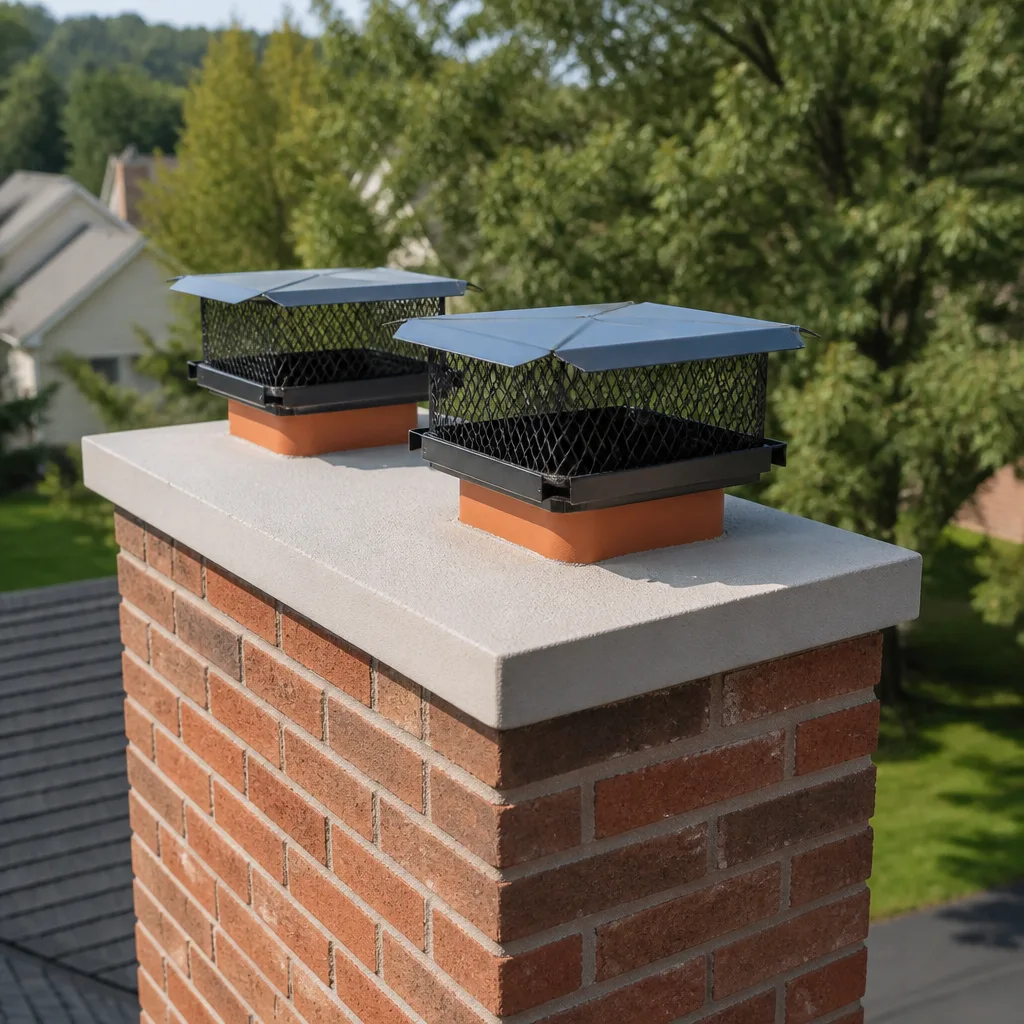 Caps & crowns
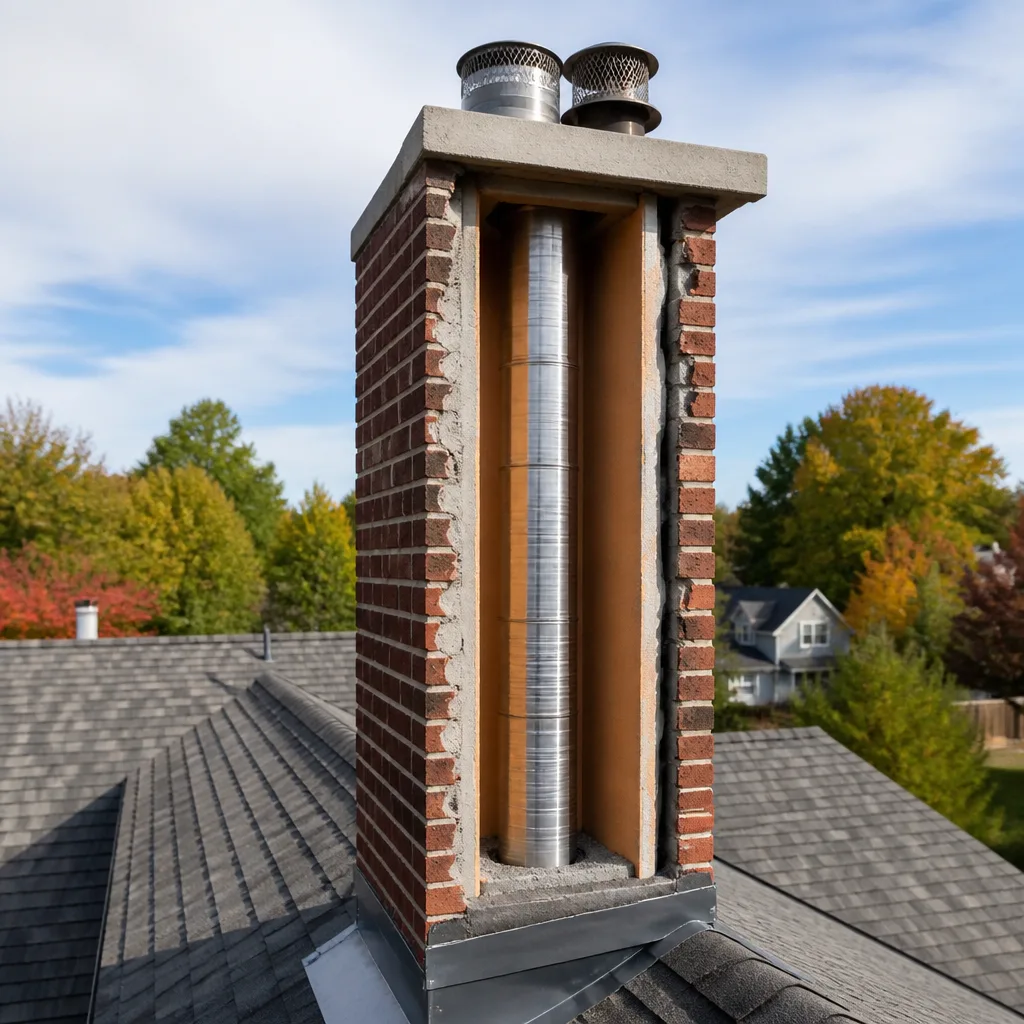 Flue relining
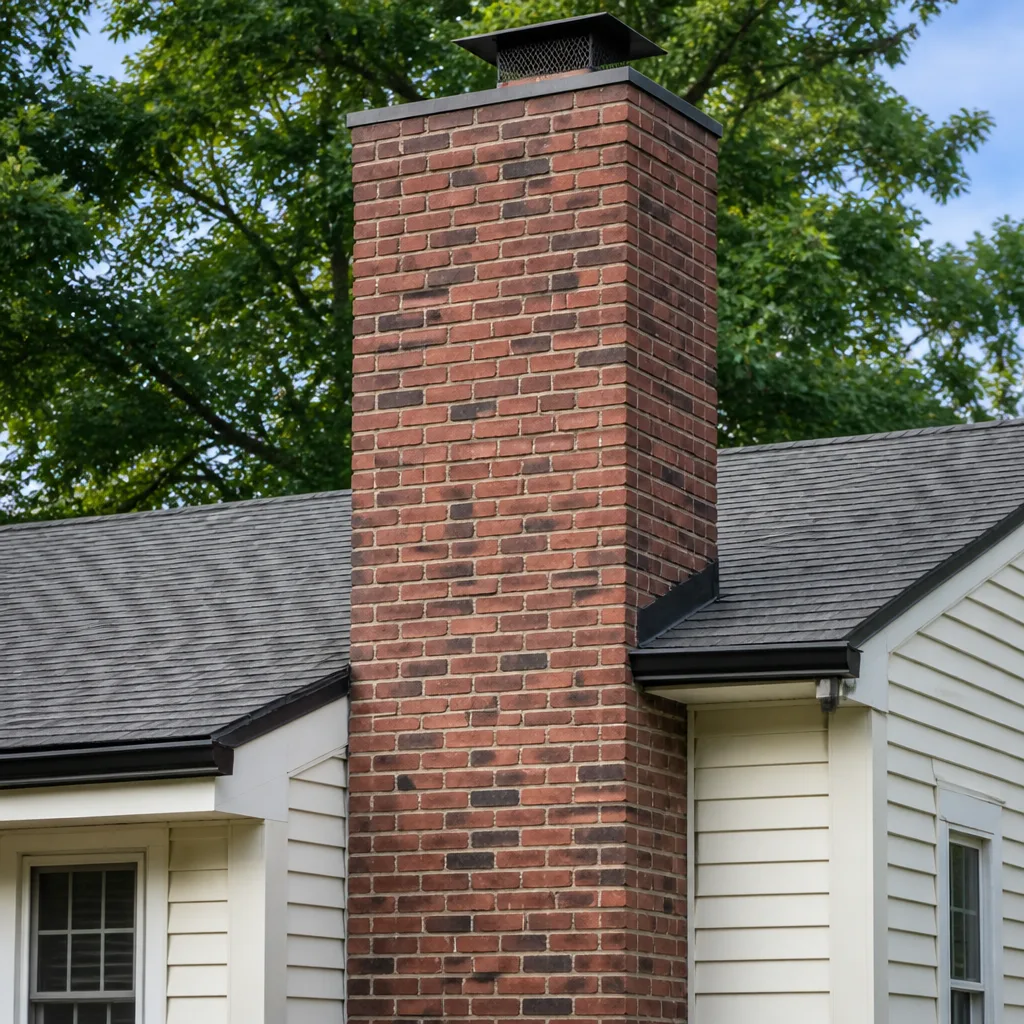 Masonry repair
 Gas fireplace service
Level 1 sweep and inspection to the NFPA 211 annual standard - flue, crown, cap, and flashing checked and photographed
Chimney sweep logs do not sweep chimneys. They loosen some creosote - which then falls where a brush and vacuum still have to collect it.
Chimney Cleaning Warning Signs: A Meadow Hills Homeowner’s Reference Guide
Most chimney problems don’t announce themselves with flames shooting out of the top. They show up quietly: a fire that’s a little harder to light than it used to be, a stain on the brick, a smell in the living room in July. Homeowners in Meadow Hills tend to explain these things away, and that’s exactly what makes them dangerous. In our experience, the chimneys that need the most work are rarely the ones the homeowner was worried about. This guide walks through the early signals a chimney gives you – in the firebox, on the walls, on the roof, and in the fire’s own behavior – so you can tell the difference between something worth noting and something worth stopping the fire for.
Quick Answer
The main chimney cleaning warning signs are a strong odor on humid days, smoke rolling back into the room, a fire that draws poorly or won’t light cleanly, flaking refractory or loose mortar inside the firebox, rust streaks, white staining or flaking brick on the exterior, soot on the mantel face, and unexplained carbon monoxide detector activations. Any of these means the flue has more than normal soot inside it – or something structural has moved. Several are urgent; a few can wait for a scheduled cleaning.
Styles & brands we work with
- Sweep & inspection
- Caps & crowns
- Flue relining
- Masonry repair
- Gas fireplace service
Table of Contents
- What Your Fire Is Telling You: Draw, Ignition, and Smoke Rollout
- What the Firebox Shows You: Flaking Refractory, Mortar Joints, and Rust
- Reading the Exterior: Efflorescence, Spalling Brick, and Crown Mortar
- Signals Inside the Home: Smoke Smell, Soot, and CO Detector Alarms
- Which Warning Signs Mean Stop Using the Fireplace Immediately
- Which Signs Can Wait for the Next Scheduled Service
- Sweep-Only Problems vs. Signs You Need Structural Repair
- How Often a Meadow Hills Chimney Needs Attention
What Your Fire Is Telling You: Draw, Ignition, and Smoke Rollout
A wood fire is a test of the flue every time you light it. The chimney works by pressure: hot exhaust rises, fresh air is pulled in to replace it, and the whole system settles into a steady draw. When the draw weakens, the fire pays for it first.
Sluggish ignition is the mildest signal. If kindling that used to catch in seconds now smolders for minutes, your chimney is moving air less efficiently than it used to. A partial restriction from soot and creosote build-up is the usual cause, though a poorly fitted damper or a stack that’s too short for the firebox can produce the same effect.
Poor draw shows up as a fire that burns low and lazy on a fully open damper. You’ll notice the logs blacken on the underside and the flames stay starved of air. In Meadow Hills, where plenty of homes sit at elevation where the air is thinner and fires need a bit more help, this gets written off as “just how it burns here” when it’s often a flue that needs cleaning.
Smoke rollout is the serious one. If smoke spills into the room as you light the fire, or rolls out from under the damper when you add a log, the chimney has stopped pulling correctly. Common causes include:
- A flue blocked or narrowed by creosote, a bird’s nest, or a collapsed liner section
- A cold stack that needs warming before it will draw (uncommon once a fire is established)
- A blocked or undersized cap screen
- Negative pressure in the house from a competing exhaust fan or a tightly sealed home
Smoke rollout deserves a stop-and-look before you light the next fire. It’s the strongest indicator that the flue isn’t clear. Our chimney sweep service includes a camera inspection so the cause shows up on video instead of guesswork.
What the Firebox Shows You: Flaking Refractory, Mortar Joints, and Rust
The firebox takes the most direct heat in the whole system, and it shows wear earlier than anything else. Look inside with a flashlight before you lay a fire, not after.
Flaking refractory brick
Refractory panels are engineered to handle heat, not to last forever. When the surface flakes, crumbles, or starts revealing a lighter color underneath, the panel has lost some of its insulating layer. Small flakes are a monitoring item. A panel with a crack through it, or a piece missing, lets heat reach the metal firebox behind it – that’s a repair, not a wait-and-see.
Collapsed or recessed mortar joints
Mortar joints between firebox bricks should be flush or slightly recessed. When the mortar recedes significantly, bricks can shift. Look for joints that are more than a quarter inch deep, or any brick that moves when you press on it. Loose bricks are a structural problem and a fire-spread hazard.
Rust streaks
Rust inside a firebox usually means water is getting in somewhere above and traveling down. The source is nearly always a failing crown, a damaged cap, or cracked exterior masonry. Rust on a damper frame in a Meadow Hills chimney after a wet spring is a common find, and it nearly always points to an exterior repair rather than something inside the firebox itself. If you find rust, the chimney cap & crown is a logical place to start looking.
Inside the firebox, what you’re really checking is how well the structure is holding heat where it belongs. Once heat is escaping through the firebox walls, the rest of the chimney is under stress too.
Reading the Exterior: Efflorescence, Spalling Brick, and Crown Mortar
Walk outside and look at the chimney from the ground, then from a safe distance with binoculars if you can. The exterior tells the story of water damage, and water damage is what drives most of the structural repairs we see in Meadow Hills.
White staining (efflorescence)
A chalky white or gray deposit on the brick isn’t mold and it isn’t paint. It’s efflorescence: salts carried to the surface by moisture moving through the masonry. Some efflorescence is cosmetic and comes from a single wet season. Efflorescence that returns after you brush it off, or that comes with a damp feel to the brick, means water is entering the chimney and has a path through it.
Spalling brick faces
When brick faces pop off in flakes or chunks, the brick has absorbed water, frozen, and pushed its outer layer off. Colorado’s freeze-thaw cycles are hard on exterior masonry. In Meadow Hills, a chimney can look fine in September and shed brick faces by February. Spalling on more than a few bricks is a repair item, and sometimes a rebuild of the top few courses.
Deteriorating crown mortar
The crown is the sloped concrete cap at the very top, and it’s the chimney’s first line of defense against water. When the crown’s mortar cracks or the crown itself cracks, water comes straight down into the flue. Hairline cracks can be sealed with a proper crown repair; a crown that’s crumbling or separated from the flue needs replacement.
All three of these are water problems, and water is what turns a routine sweep into a structural repair. That’s why our service covers the whole chimney – from the firebox to the cap – instead of stopping at the brush.
Signals Inside the Home: Smoke Smell, Soot, and CO Detector Alarms
Some warning signs never appear near the fireplace at all. They show up in the living room, on the walls, or in the form of an alarm going off.
Smoke smell in the living space
A faint smoke smell during and after a fire can simply be a damper timing issue. A strong smoke smell that lingers for days, or that appears when the fireplace hasn’t been used in weeks, is different. It usually points to a leak in the flue: a joint that’s opened, a gap in a clay liner, or a lower flue that isn’t sealed off from the one above it. On humid summer days in Meadow Hills, that smell gets much stronger – see the creosote section below for why.
Soot on the mantel face or the wall above the firebox
Soot streaks above the firebox opening mean smoke is escaping at a spot where it shouldn’t. It could be a warped damper frame, an undersized firebox opening, or a draft problem. Soot on a mantelpiece is a sign worth mentioning at your next inspection, because it can build for months before it becomes obvious.
Unexplained CO detector activations
Carbon monoxide is the working hazard of a wood-burning chimney. A properly drafted flue takes CO up and out. A partially blocked flue, a flue with broken liner sections, or a backdrafting fireplace can push CO into the home instead. If a CO detector has ever gone off in a room with a fireplace, get the chimney inspected before you burn again, even if the alarm only lasted a few seconds. (That’s not a scare tactic: it’s what the alarm is telling you.)
Interior signs like soot and smoke smell are easy to live with. The hazard they point at is not. Our Chimney Sweep Meadow Hills inspection puts a camera in the flue so you can see the leak for yourself rather than take our word for it.
Which Warning Signs Mean Stop Using the Fireplace Immediately
Some warning signs are notes for later. A few are instructions to stop burning until somebody qualified has looked at the chimney. In our experience, homeowners are usually relieved to hear there’s a clear line, because the ambiguity is what makes them ignore the problem.
Stop using the fireplace and get the system inspected if you notice any of the following:
- Smoke rolling into the room on a regular basis. A fire that won’t draw is a fire that’s finding somewhere else to send its exhaust.
- Any CO detector activation. One event is enough. Don’t wait for a second.
- Visible fire inside the flue, or a roaring sound from the chimney that doesn’t match the fire in the firebox. That’s a chimney fire in progress: call 911 and get everyone out of the house.
- A large area of glazed, shiny, or puffy creosote in the flue. Glazed creosote ignites at lower temperatures than ordinary soot, and once it’s present, the next fire could be the one that starts it. A chimney sweep must remove it before the fireplace is used again.
- Soot or creosote flaking off the cap or staining the roof below it. This means deposits are actively breaking down.
- Loose brick or fallen mortar inside the firebox, or a chimney visibly leaning. Structural failure can release hot gas and flame into the wood framing.
- Water actively dripping into the firebox. A leaking flue means the liner is compromised.
On the fire behavior side, a fire that repeatedly struggles to light or draws weakly is worth a stop-and-inspect. It’s not always a chimney problem, but it’s the cheapest signal to act on early.
Which Signs Can Wait for the Next Scheduled Service
Not every warning sign is an emergency, and pretending otherwise would be its own kind of problem. If none of the stop-use signs are present, the following are safe to note and address at your next cleaning:
- Light smoke odor after a fire, tapering off within a day. Worth mentioning at your sweep, not worth a same-week call.
- Minor flaking on a refractory panel with no crack through the panel and no missing pieces.
- Efflorescence that brushes off cleanly and doesn’t come back within a season. A sign of past moisture, not necessarily a current leak.
- Small hairline cracks in the crown mortar that aren’t letting water through.
- A few isolated spalled brick faces on an otherwise sound stack.
- Soot on the mantelpiece with no smoke smell and no CO alarms.
The line between “wait” and “stop” isn’t something anyone should judge from the floor of the fireplace, though. A camera inspection is what tells you which category you’re in. We tell homeowners plainly when a chimney can safely wait, because a recommendation you can’t verify isn’t a recommendation – it’s a sales pitch.
Sweep-Only Problems vs. Signs You Need Structural Repair
Roughly speaking, chimney problems split into two buckets. One bucket is dirt: soot and creosote, which a cleaning removes. The other bucket is damage: cracking, movement, water entry, and heat damage, which a cleaning alone can’t fix. Knowing which bucket your warning signs point to tells you what the next step is likely to involve.
Signs that point to a cleaning: some smell after a fire, a sluggish draw, a thin soot layer above the firebox, soot deposits on the cap. These are the ordinary results of use, and they’re exactly what a sweep is for.
Signs that point to repair:
- Glazed creosote: chemical removal or liner work, not a plain brush
- A cracked liner, visible as a gap in the clay tiles or as a break on camera
- Efflorescence or spalling combined with rust inside the firebox (water is getting in)
- Cracked or missing crown mortar
- A damaged or missing cap
- A firebox with loose brick or a fireback with cracks
This is why we work with professional-grade materials rather than hardware-store substitutes. When a chimney needs a liner, our DuraFlex flexible liner system covers a full reline of the flue, not a patch. When a clay liner has cracked but hasn’t failed, HeatShield liner resurfacing rebuilds the interior surface without a full reline. Both are repairs the same specialist who cleaned the flue can carry out – no handoff to a separate crew. If you’re facing a fireplace-side problem, our fireplace repair covers the firebox itself, including the refractory and fireback.
How Often a Meadow Hills Chimney Needs Attention
A chimney should be inspected once a year and swept as needed. “As needed” is doing real work in that sentence: how often you need an actual cleaning depends on what you burn, how much, and how the chimney’s details sit in this climate.
In Meadow Hills, the burn season is long, and homes burn a lot of soft and mixed wood. That produces more creosote per cord than burning dry hardwood year-round, and the creosote tends to be heavier in chunks than the light soot you’d see in a hotter, drier burn pattern. Fires at higher elevation, with slightly thinner air, also burn a bit cooler in a wood stove that wasn’t sized for the altitude, which adds to creosote.
How to know when a sweep is due:
- Annual inspection, no matter what. A camera inspection once a year catches a cracked liner or a failing crown before it becomes a rebuild.
- Sweep when the flue is 1/8 inch thick with soot, or when you can no longer see the flue walls. A camera inspection with the cleaning makes this visible.
- Burn-volume shortcut: if you burn more than a cord a year, expect at least one cleaning per season, more if you burn green wood.
- Right after buying a home in Meadow Hills. A pre-purchase inspection is the cheapest service you’ll ever buy on a house, and it’s how you find out what previous owners left behind.
- Right after a chimney fire, even a small one. A chimney fire damages liners from the inside out, and the damage isn’t visible from the room.
A chimney is a working system, not a hole in the wall. Treating it like a maintenance item – inspected once a year, swept when the camera says so – keeps it from turning into a structural repair. Even a well-kept chimney eventually faces a cap that loosens, a crown that cracks, or a liner that ages out. You can call us for those the same way you call for a sweep.
Common Mistakes to Avoid
- Burning cardboard, wrapping paper, or construction scraps. Paper fires produce more creosote per minute than a hardwood log, and the creosote lands as a light, fast-building layer. It’s the most common reason a Meadow Hills flue reaches the 1/8-inch threshold faster than the owner expected.
- Interpreting the summer smell as “just a damp house.” A strong creosote smell in humid weather means glazed creosote is present and off-gassing, not that your basement is damp. Treat it as a cleaning reminder.
- Using a hardware-store sweep-and-go or a brush on a pole. A brush removes soot. It doesn’t tell you why the draw is weak, whether a liner tile is cracked, or whether the crown has failed. The cleaning is the easy part; the inspection is where the warning signs get read.
- Skipping the crown and cap because the firebox looks fine. Most water damage we see in Meadow Hills starts at the top. A crown crack or a missing cap, left alone for a couple of seasons, can rot through a flue that hasn’t had a fire in it this year.
- Reading a CO alarm as “a faulty detector.” CO alarms do fail, but a chimney with a drafting problem is the more common cause. If the alarm has ever fired in a room with a fireplace, treat it as a data point about the chimney until a camera inspection proves otherwise.
- Assuming a newer home in Meadow Hills is safe because the chimney is newer too. Newer masonry can still settle, and factory-built fireplaces have specific liner assemblies that fail in recognizable ways. Age of the house is not a substitute for inspection.
- Burning wood that hasn’t dried. Wood above around 20% moisture content is the classic cause of accelerated creosote build-up. Split, season, and stack your wood before the season starts.
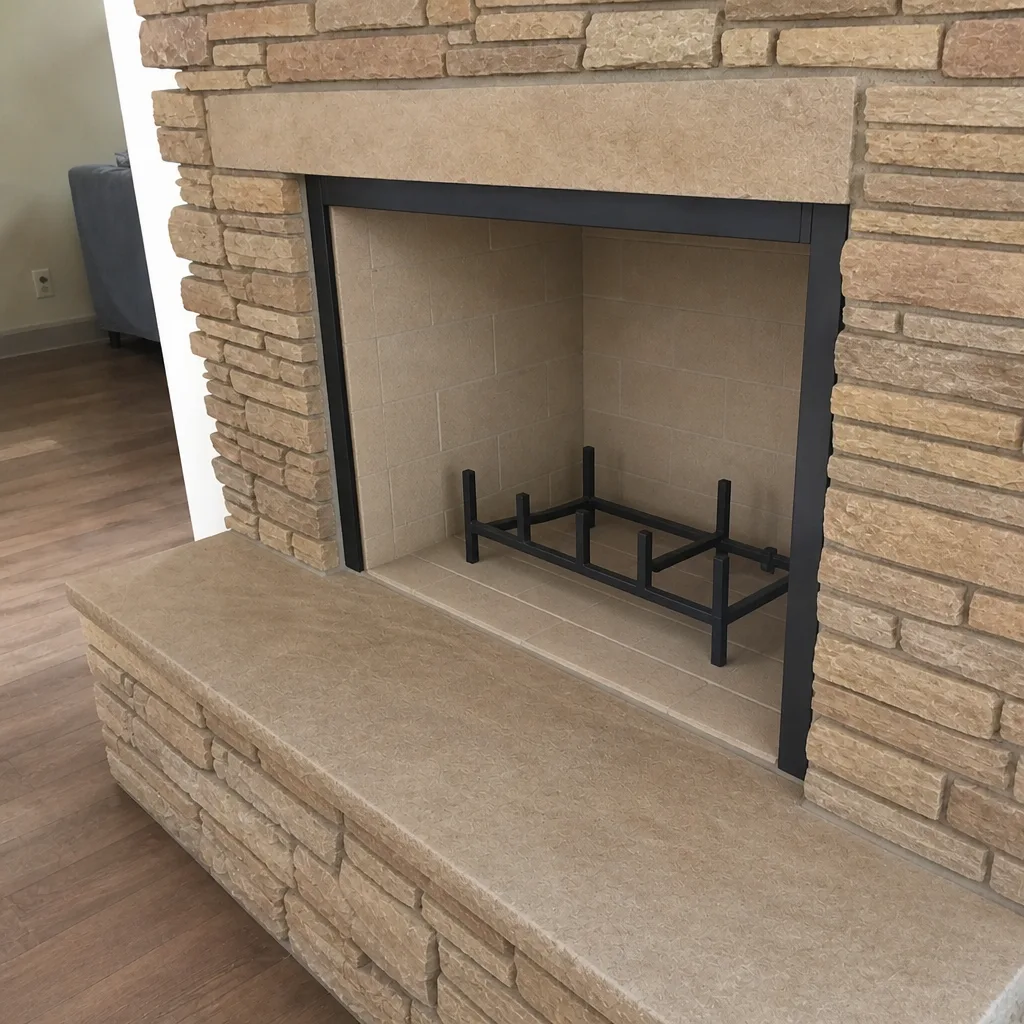
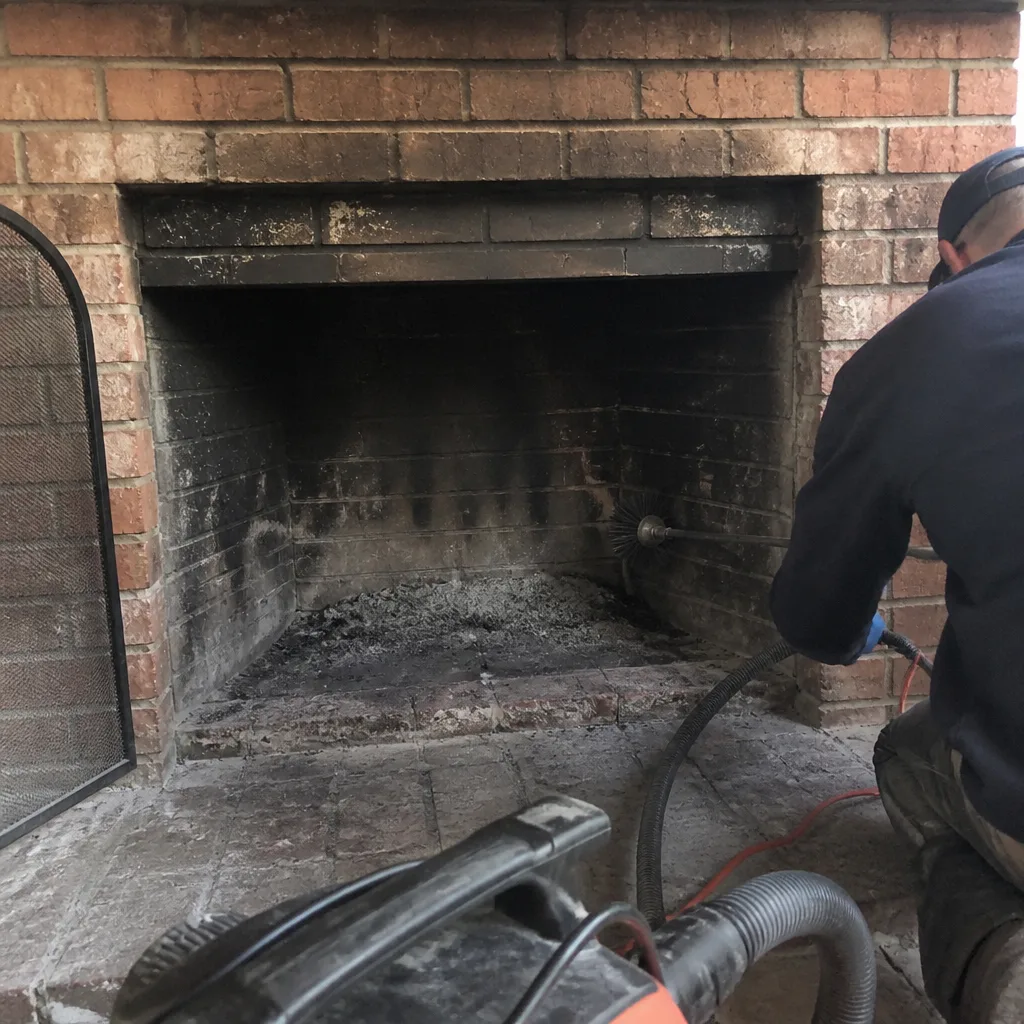
See the difference
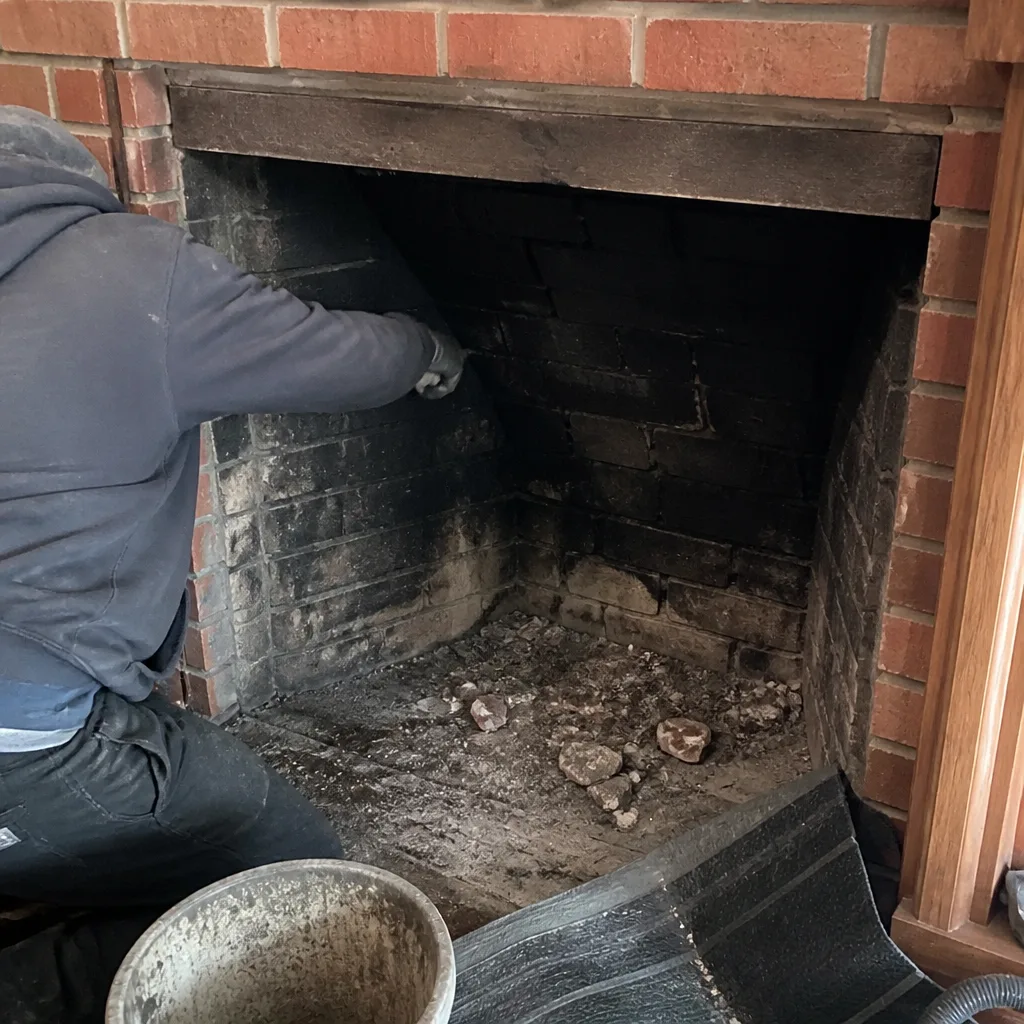 Before
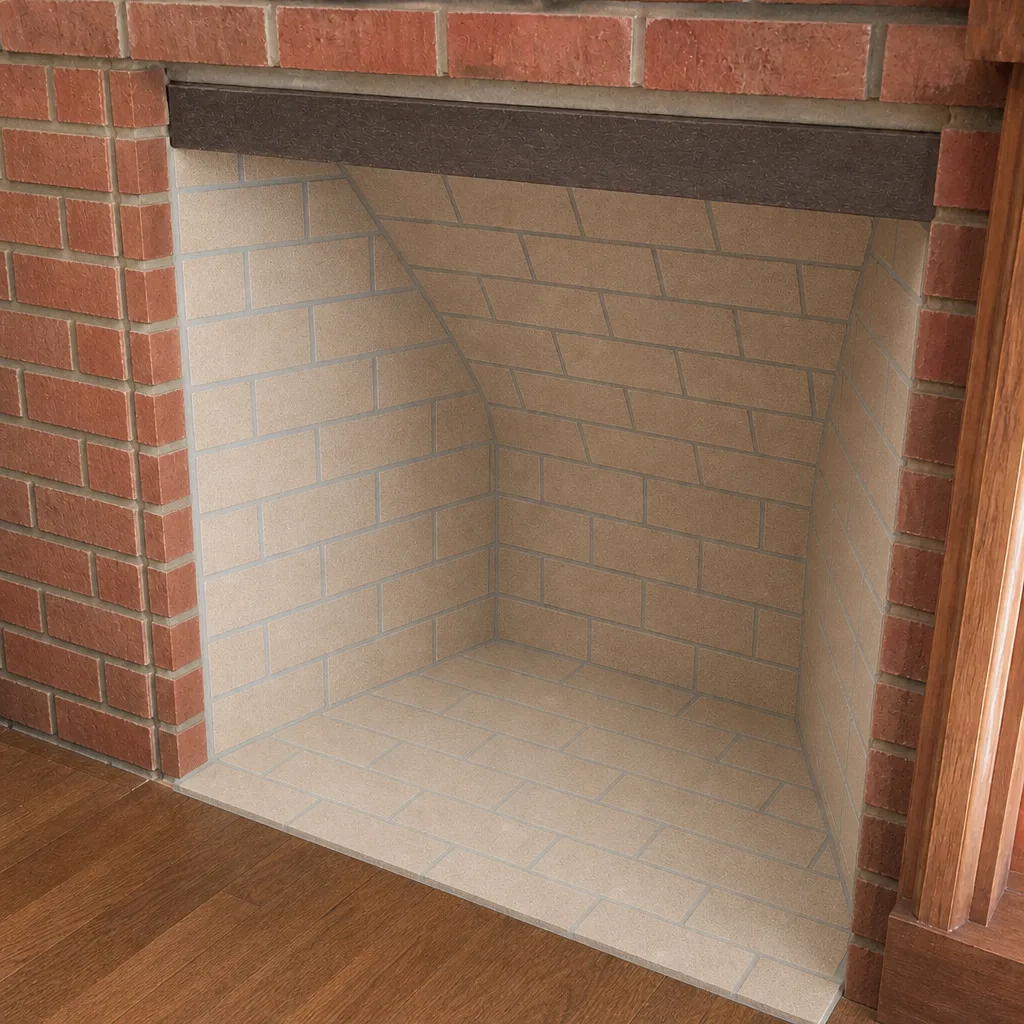 After
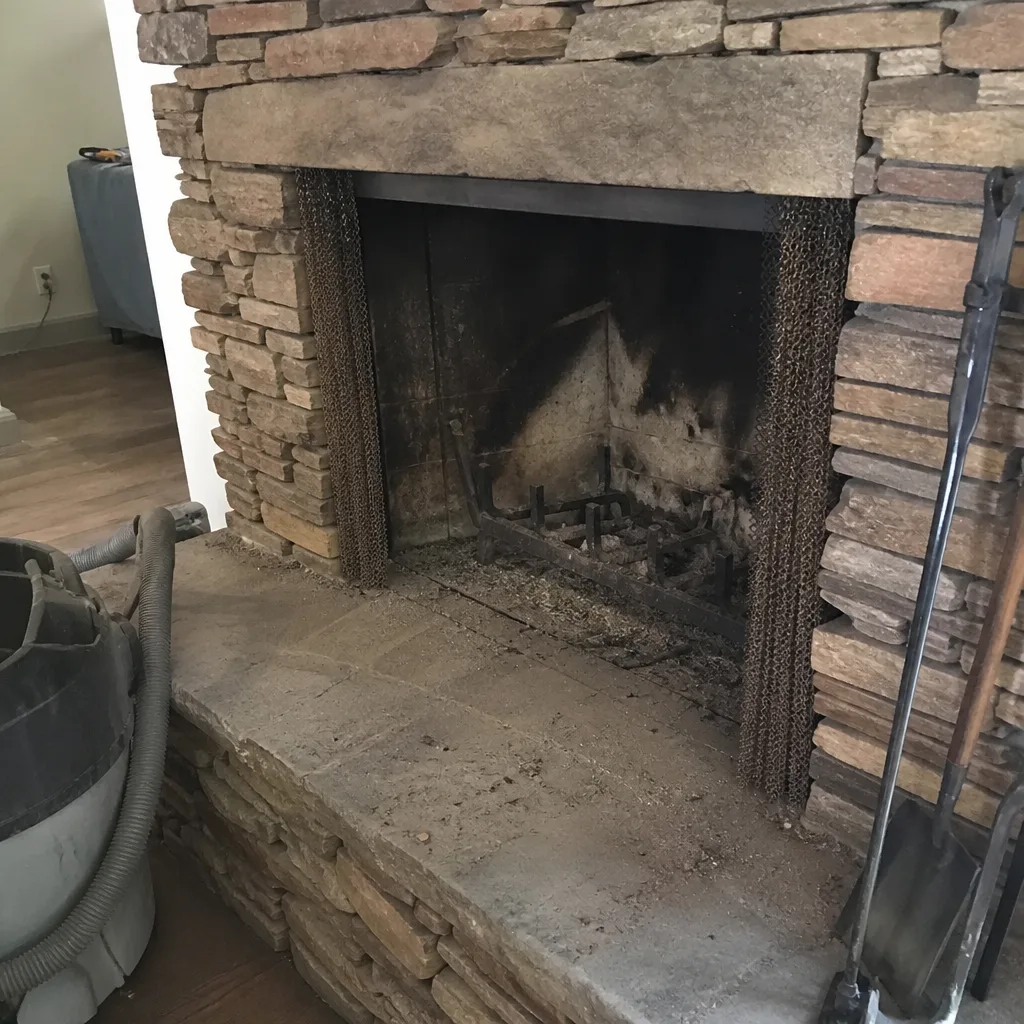 Before
 After
 Before
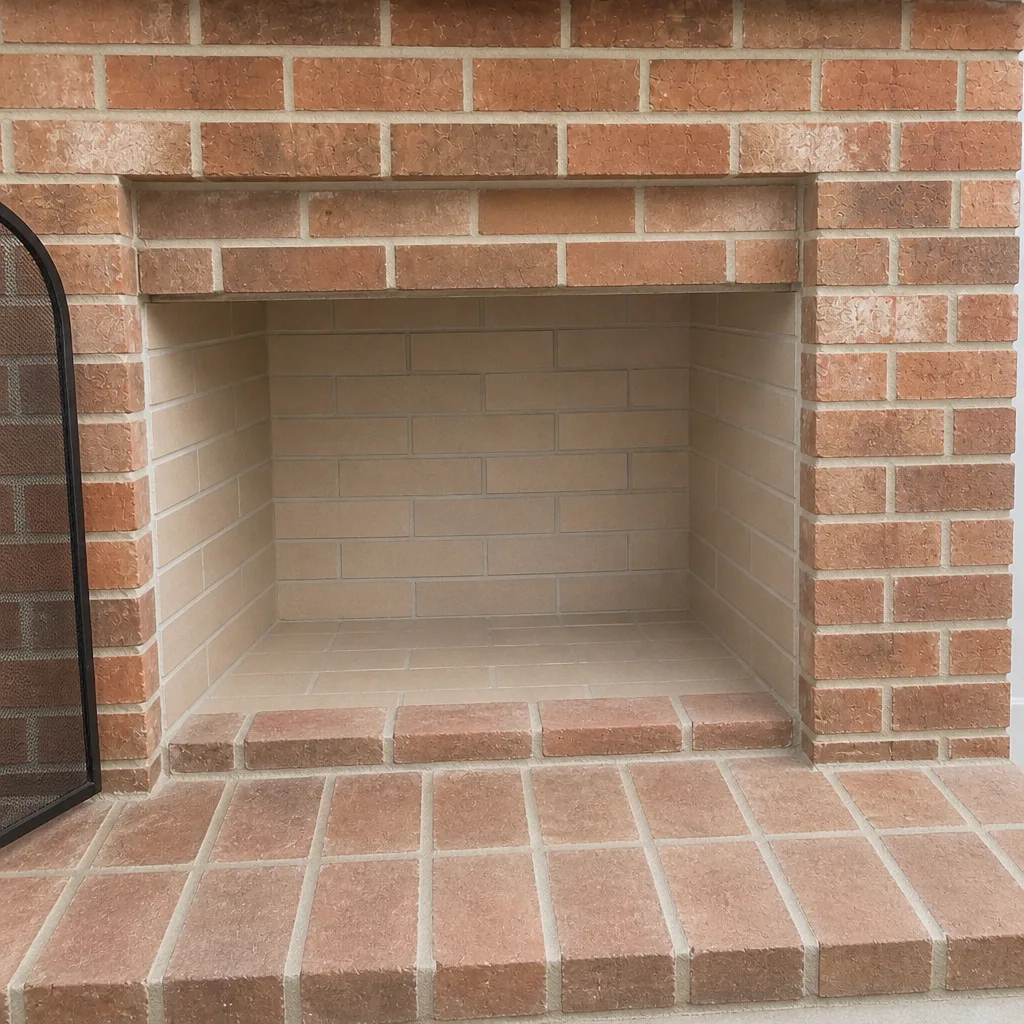 After
When to Call a Professional
Call us for an inspection if you notice any stop-use warning sign, any CO detector event in a room with a fireplace, or a smoke smell that doesn’t go away in a day. Call before you burn again if you’ve moved into a Meadow Hills home whose fireplace hasn’t been inspected in a while. Call if your fire is drawing poorly and you’ve already tried seasoned wood and a warm flue. And call if a crown, cap, or liner issue has been on your list for more than a season, because those wait badly.
We cover the full chimney system – from firebox to cap – and the same specialist who sweeps the flue is qualified to repair the crown or reline the stack. We use professional-grade brands including HeatShield and DuraFlex rather than commodity substitutes. Chimney Sweep Meadow Hills offers free estimates in Meadow Hills – call (855) 658-4120.
Frequently Asked Questions
The earliest signs are usually reduced draw, a fire that’s harder to light, and a faint smoke smell that lingers after the fire dies. These are quickly followed by soot on the mantel or the wall above the firebox. Call (855) 658-4120 for an exact quote on a cleaning – estimates are free.
A strong smell from a fireplace on humid summer days usually means glazed creosote is present in the flue and releasing odor. Creosote off-gasses when the air is damp, and a heavy, glazed deposit is a sign the flue needs professional cleaning, not air freshener. Call (855) 658-4120 for an exact quote – estimates are free.
Stop using the fireplace if smoke rolls into the room, if a CO detector sounds, if you see flames or hear roaring from the chimney, if there’s a large puffy or glazed creosote area in the flue, or if the firebox has loose bricks or fallen mortar. These are signs that the chimney has failed or is failing, not signs of an overdue cleaning. Call (855) 658-4120 for an exact quote – estimates are free.
A chimney should be inspected annually and swept when deposits reach about 1/8 inch or when the flue walls aren’t visible. In our experience, Meadow Hills homes that burn through most of the season need at least one cleaning per burn season, sometimes two. Call (855) 658-4120 for an exact quote – estimates are free.
White staining is called efflorescence, and it means water has moved through the masonry and carried salts to the surface. If it brushes off and doesn’t return, your chimney is probably fine. If it returns, or if the brick faces are popping off, the chimney has an active water entry issue that needs repair. Call (855) 658-4120 for an exact quote – estimates are free.
A cleaning fixes soot and creosote. A new liner is needed when the flue’s structure has failed: a cracked clay tile, a gap in the liner, or damage from a chimney fire. You should never be told you need a liner without seeing the damage yourself on camera. If the liner is intact but the surface has flaked, HeatShield resurfacing can restore it without a full reline. Call (855) 658-4120 for an exact quote – estimates are free.
Skipping a cleaning lets creosote accumulate until it’s a fire hazard and lets small structural problems become large ones. A hairline crown crack that costs little to repair in year one can become water damage inside the flue, and eventually liner replacement, if it’s left for two or three seasons. Call (855) 658-4120 for an exact quote – estimates are free.
You can keep burning if none of the stop-use signs are present and the reason for your call is a routine cleaning or a seasonal check. If the flue is smelling strongly, drawing poorly, or the CO detector has sounded, don’t light another fire until you’ve had an inspection. Call (855) 658-4120 for an exact quote – estimates are free.
The Bottom Line
Chimney warning signs are quiet by design. They show up in the fire’s behavior before they show up on the camera, and in efflorescence and spalling on the exterior before they show up in the firebox. Reading them early is what keeps a sweep a small job and stops a crown crack from becoming a liner replacement. The main categories to remember: fire behavior (draw, ignition, rollout), firebox (refractory, mortar, rust), exterior (efflorescence, spalling, crown), and interior (smoke smell, soot, CO alarms). When in doubt, stop burning until the flue has been inspected. The line between “wait” and “stop” isn’t one a homeowner should have to draw alone. Call (855) 658-4120. We answer 24/7. Fast dispatch from 7am to 7pm, Sunday through Friday.
Written by the team at Chimney Sweep Meadow Hills.